Tobacco humidity control starts with a familiar clue: a once-pliable blend now feels brittle, burns fast, or stays too damp to remain lit. Pipe tobacco contains enough moisture to stay flexible and burn at a measured pace. However, the leaf constantly exchanges moisture with the surrounding air. An open pouch loses water in a dry room and absorbs it in humid conditions.
No single reading suits every ribbon, flake, plug, or heavily cased aromatic. Instead, aim for tobacco that separates without crumbling and holds a loose shape after a gentle pinch. It should not feel wet against your fingers. Proper storage maintains that condition by limiting exposure to air, heat, light, and household odors.
Storage cannot make tobacco safe. Pipe smoking carries serious health risks, including cancers of the mouth, throat, and lungs, even without deliberate inhalation.
Why Moisture Changes the Way Pipe Tobacco Smokes
Moisture affects ignition, burn rate, flavor, and condensation inside the pipe. Dry tobacco catches a flame quickly and may race through the bowl. The resulting heat can sharpen flavors and irritate the tongue. Smoking cadence, packing technique, and blend chemistry also influence heat.
Extremely brittle leaf creates other problems. Ribbons turn to dust during handling, while flakes lose the flexibility needed for folding or rubbing out.
Overly moist tobacco causes the opposite problems. Water must heat and evaporate before the leaf can burn steadily. As a result, a wet bowl may need repeated relights and produce steam or gurgling.
Aromatic blends often feel damp because casings and humectants create a tacky texture. That texture does not always indicate excess water. Instead of expecting complete dryness, check how the blend packs, lights, and burns. Excessive condensation and constant relights often indicate too much moisture.
Tobacco Humidity Control Requires Balance, Not One Number
Relative humidity measures moisture in the air. Tobacco moisture content measures water held within the leaf. These conditions influence each other inside a sealed container, but they are not interchangeable.
A hygrometer measures the air inside a container rather than the water in each ribbon or flake. The reading can change after you open the jar or move it between rooms. Freshly packed tobacco also needs time to reach equilibrium.
Many smokers keep pipe tobacco at lower humidity than cigars. Still, no official setting works for every blend. Commercial recommendations vary, and cigar-oriented humidity levels may leave pipe tobacco wetter than desired.
Use texture, packing behavior, and combustion alongside any instrument reading. If a new tobacco arrives in good condition, preserve it in an airtight container. Do not add moisture automatically.
How Cut, Processing, and Blend Style Affect Moisture
Fine ribbon exposes more surface area to air, so it dries faster than flake, cake, plug, or rope. Thick cuts may feel dry outside while holding considerable moisture within. Break off only enough compact tobacco for the next bowl. Store rubbed-out flake with the larger pieces instead of preparing it far in advance.
Virginia-rich mixtures often need enough moisture to remain pliable. However, tight packing or rapid puffing can make them smoke hot. Burley may feel dry and springy by design. Adding water simply because it lacks tackiness can make it harder to burn.
Latakia mixtures often come as ribbon or broken flake. Repeated air exposure can reduce some of their aromatic intensity. Aromatics vary more because flavorings, casings, and humectants change both texture and perceived moisture. Comparing them with unflavored blends rarely provides a useful guide.
Choosing a Container for Pipe Tobacco
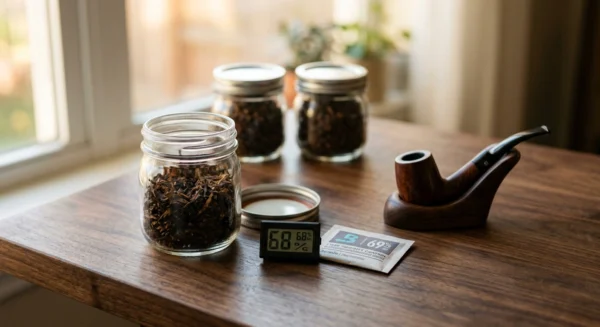
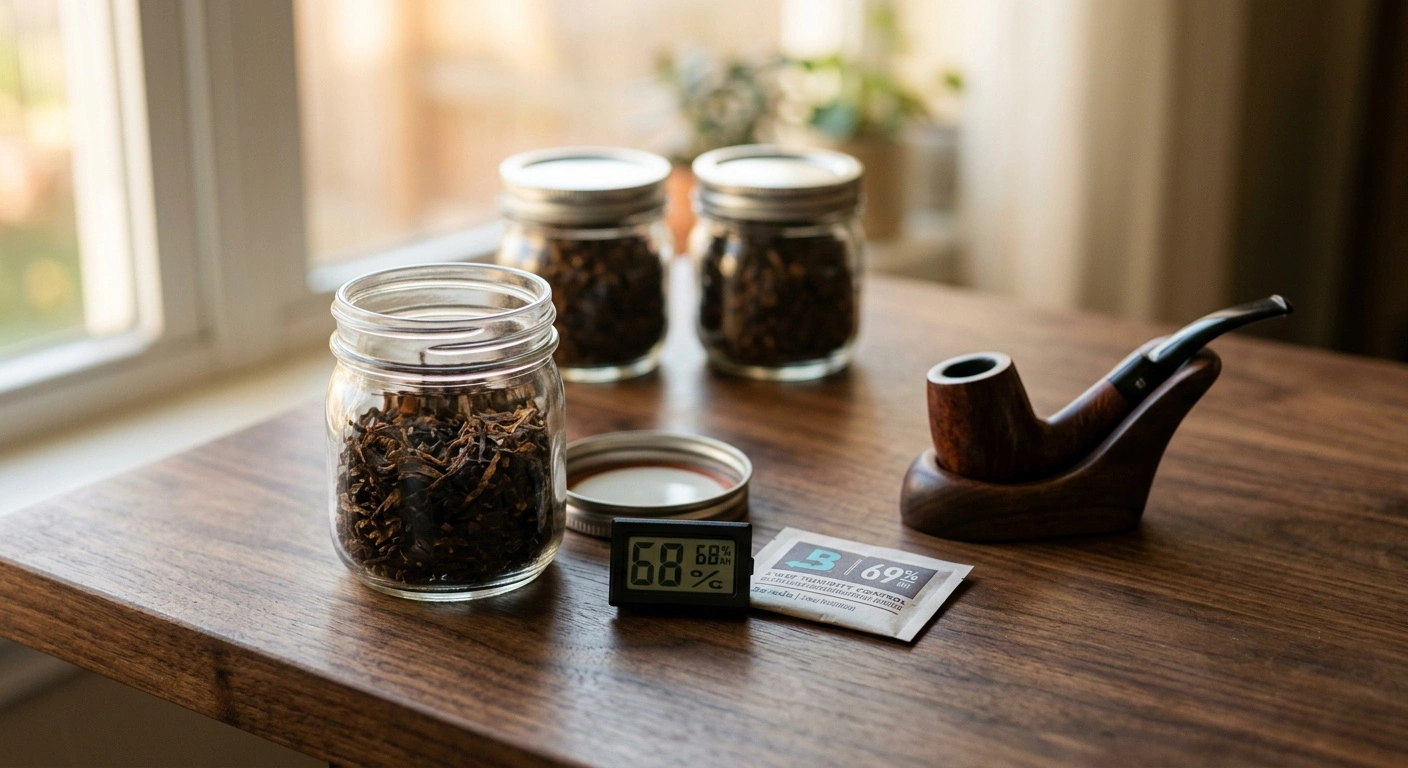
A good storage container limits air exchange without adding odors or reacting with the leaf. Glass canning jars seal well, allow easy inspection, and release old aromas after thorough cleaning. Factory-sealed tins also support long-term storage because the manufacturer packs them at the intended condition.
Treat original pouches and snap-top tins as short-term packaging unless the manufacturer calls them airtight. Thin packaging gradually releases moisture and aroma.
Container size also matters. A nearly empty jar holds more air than a reasonably full one. Repeatedly opening a large jar for a small daily portion exposes the whole supply to fresh air. Dividing bulk tobacco among several modest jars reduces that exposure.
Store every container in a stable, dark location. Keep it away from heaters, sunny windows, damp basements, and strong household odors.
Sealed Factory Tins
Leave an intact factory tin sealed until you need the tobacco. Opening it to check the humidity breaks the seal and starts a new cycle of air exposure. Store tins where heat, pressure, or sharp objects cannot damage them.
Inspect tins for surface rust, leakage, seal failure, or severe deformation. These signs require careful attention rather than optimistic assumptions about the contents.
After opening, some tins close securely enough for brief use. However, many lids do not provide a dependable long-term barrier. Transfer tobacco for later use to a clean glass jar.
Label the jar with the blend name and packing date. Loose blends can look surprisingly similar after several months. Place labels outside the container rather than putting paper among the leaf.
Glass Jars
Choose clean, odor-free canning jars with sound lids and sealing surfaces. Jars that held pickles, spices, sauces, or scented products may retain unwanted aromas. Tobacco readily absorbs those smells.
Let washed jars dry completely before filling them. Free water can cause uneven hydration and increase the risk of spoilage. Pack the tobacco loosely enough to remove it without grinding the leaf. If a jar remains mostly empty, use a smaller one.
Wipe stray strands from the rim before closing the lid. Those pieces can interfere with the seal. Tighten the closure until it feels snug and secure, but do not force it.
Clear glass makes inspection easy, but it offers no protection from light. Keep jars in a cupboard or closed cabinet. Do not freeze them, heat them to create a vacuum, or apply home-canning procedures. A clean jar and a sound airtight closure provide enough protection.
Pouches, Humidors, and Plastic Containers
A manufacturer’s pouch works well for carrying a small amount, especially if it has a reliable zip closure. However, thin plastic slowly releases moisture and aroma. That makes it unsuitable for long-term cellaring.
Leather tobacco pouches may include a lining that slows drying, but leather does not create an airtight barrier. Fill them from a larger jar with only the amount you expect to use soon.
A cigar humidor does not automatically suit pipe tobacco. Its humidity setting may run too high, and its wood can transfer aromas to the leaf. Open blends stored together can also exchange scents before they reach a pipe.
Food-grade plastic containers can work if they have dependable seals and no noticeable odor. Glass remains easier to inspect and clean. Never store tobacco near cleaners, fuel, perfume, incense, or other strongly scented materials.
Tools for Tobacco Humidity Control
The most useful tools remain simple: airtight jars, sound lids, clear labels, and occasional inspection. Hygrometers and humidity packs can provide extra information or help correct a problem. They cannot compensate for a poor seal.
A leaking container continues to exchange air regardless of the products inside it. Likewise, a humidity source cannot tell the difference between dry tobacco and an aromatic that merely feels sticky.
Make adjustments conservatively because excess moisture takes time to correct. Add nothing to tobacco that already packs and burns well. If the blend needs attention, test a small amount before treating the entire supply.
Give the tobacco time to equalize after each change. Several rapid corrections can produce alternating wet and dry conditions.
Using a Hygrometer
A compact digital hygrometer can monitor a large storage container, although many jars lack room for one. Follow the manufacturer’s instructions for calibration, operating range, and placement. Consumer devices vary in accuracy, so ignore tiny changes in the display.
Allow a closed container to stabilize before relying on the reading. Keep the sensor away from wet material and humidity sources, which can distort the result.
Compare each reading with the tobacco’s texture and smoking behavior. If the display indicates dampness but the leaf separates and burns normally, continue observing it. Avoid drying the whole jar based on one reading.
A hygrometer works best as a trend monitor. It may reveal a failing seal or a container that stays persistently humid.
Humidity Packs and Passive Humidifiers
Two-way humidity packs release or absorb moisture around a specified level. Choose a product intended for tobacco storage, and check its stated humidity level. Follow the manufacturer’s container-size and replacement instructions.
Some cigar-oriented packs can leave pipe blends soggy. Check the package rather than assuming every tobacco product uses the same setting. Never cut open, soak, or modify a humidity pack.
Clay disks, terracotta pieces, and similar passive humidifiers release water without actively limiting the final humidity. Direct contact can create a wet zone and raise the risk of mold. If you use one, follow its directions and keep it separate from the tobacco. Inspect the container often.
Avoid sponges, wet paper, fruit peel, bread, and potato. These materials can introduce microbes, odors, sugars, and uncontrolled amounts of water.
Recognizing Dryness, Excess Moisture, and Mold
Dry tobacco often feels brittle, dusty, or unable to hold shape after a gentle pinch. Flakes may crack instead of bending. Fine ribbon may fragment during handling.
Wet tobacco tends to clump tightly, feel cool or slick, and resist ignition. It may also cause persistent gurgling in a clean, properly packed pipe.
Mold requires a different response. It often looks fuzzy, web-like, raised, or irregular. Growth may spread through the tobacco in uneven patches.
Musty, sour, or rotten odors also indicate trouble, even when growth remains hard to see. If you cannot identify the condition with confidence, discard the tobacco. Do not smoke it or attempt to salvage it.
How to Rehydrate Dry Pipe Tobacco
Rehydrate tobacco slowly and indirectly. Pouring or spraying water onto the leaf creates wet spots while other pieces stay dry. Use distilled water in passive humidifiers to avoid minerals and odors from tap water.
Work with a small batch and prevent the moisture source from touching the leaf. Very dry tobacco may regain flexibility, but lost volatile aromas may not return. Rehydration restores water, not the full character of a newly opened blend.
Use the following method and stop as soon as the tobacco becomes pliable:
- Place the tobacco in a clean, airtight jar. Leave enough room for air movement without compressing the leaf.
- Add a controlled humidity pack or separated passive humidifier. Make sure it cannot touch or drip onto the tobacco.
- Close the jar and wait. The leaf should become flexible gradually rather than suddenly turning wet.
- Mix the tobacco gently. Compare leaf from the top and bottom for a similar texture.
- Test a small sample. It should compress lightly, separate again, and show no slick or soggy areas.
- Remove the humidity source at the right condition. A sealed jar should then retain the regained moisture.
How to Dry Tobacco Before Packing
Some tobacco stores well but remains wetter than preferred for immediate smoking. In that case, dry one bowl’s worth instead of changing the whole jar. Spread the portion in a thin layer on a clean ceramic plate or plain paper.
Keep the tobacco away from direct sun, fans, heaters, and cooking odors. Turn or loosen it occasionally so the surface dries evenly.
The stopping point depends on the cut. The leaf should feel supple and separate easily, not turn crisp. Pack it once it reaches that stage because small portions dry quickly in open air.
- Remove one bowl’s worth. Keep the main supply sealed while the portion airs.
- Spread the tobacco loosely. Break apart dense clumps without needlessly shredding flakes.
- Check it at short intervals. Look for less surface dampness and easier separation.
- Use a gentle pinch test. The tobacco should relax after compression instead of staying in a wet lump.
- Pack the bowl normally. If it still resists lighting, give the next portion slightly more drying time.
What to Do About Suspected Mold
Do not smoke tobacco with suspected mold or remove only the visible patch. Growth can extend beyond what you see, especially inside a dense plug or tightly filled jar. Avoid sniffing deeply into the container.
Seal the suspect tobacco before disposal to limit the spread of spores. Then wash the empty jar thoroughly and inspect the lid and gasket. Replace damaged closure parts before using the jar again.
Let the container dry completely after cleaning. Avoid bleach, perfume, and harsh cleaners that could leave residue. Never mix cleaning chemicals.
Inspect nearby jars for excess moisture, damaged seals, unusual odors, or similar growth. Harmless crystals do not prove that tobacco is safe when its appearance or smell suggests contamination.
Long-Term Cellaring and Aging
Long-term storage requires airtight containers, stable temperatures, darkness, and patience. It rarely benefits from constant humidity adjustments. Sealed factory tins and properly closed glass jars remain the standard choices.
Label each container with the blend and packing date. Keep a simple inventory so jars do not disappear at the back of a cabinet. Several small jars let you open one without exposing the whole supply.
Aging does not improve every tobacco, and each blend style changes differently. Virginia-based mixtures may soften or deepen over time. Aromatic toppings can fade, while smoky components may shift in prominence.
These changes happen gradually and may not suit every smoker. Aging cannot rescue tobacco that starts out moldy, excessively wet, or contaminated.
Check stored containers periodically for corrosion, leaks, failed seals, and physical damage. Do not open sound tins or jars simply to inspect the tobacco. Opening introduces fresh air and disrupts the sealed environment.
Keep the cellar away from strongly ghosted pipes and products with volatile aromas. A cool interior cupboard with a steady household temperature usually works better than complicated equipment.
A Practical Pipe Tobacco Storage Routine
Judge the tobacco as received instead of chasing a predetermined humidity reading. If it feels pliable, packs evenly, and smokes without unusual relights or condensation, store it and leave it alone.
Transfer tobacco from permeable pouches to clean jars if you will not use it soon. Keep a smaller working jar or pouch for regular use. This approach limits air exposure to the main supply.
When tobacco feels too wet, air only the next bowl. When it becomes truly brittle, rehydrate a small test portion slowly. Use hygrometers and humidity packs as supporting tools rather than absolute guides.
Inspect any jar that develops an unfamiliar odor, visible growth, or persistent excess moisture. Discard doubtful tobacco. Good tobacco humidity control relies mainly on restraint: use a sound seal, stable storage, clean tools, and fewer unnecessary adjustments.