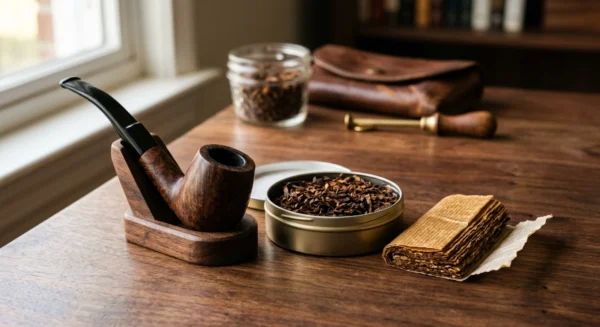
Pipe tobacco cellaring starts with a favorite blend, a sealed container, and a plan to store it safely. Cellaring preserves moisture and may allow a tobacco to develop over time. Some blends grow softer and more integrated. Others simply stay fresh or gradually lose their original character.
Containers, packing moisture, and storage conditions matter more than elaborate equipment. Clean glass jars and sound factory-sealed tins cover most needs. A dark indoor cupboard usually works better than a damp basement. Focus on preservation first and possible flavor development second.
This guide concerns tobacco intended for adults. In the United States, federal law prohibits tobacco sales to anyone under 21. Pipe smoking can cause cancers of the mouth, throat, and lungs, even without inhaling.
Pipe Tobacco Cellaring Fundamentals
Stored tobacco changes as its leaf components, sugars, flavorings, and moisture continue to interact. A sound container retains volatile aromas and helps the tobaccos in a blend integrate. Virginia-based mixtures often show noticeable development because they contain substantial natural sugars. Smoky, spicy, and flavored blends can also change, although results vary.
Cellaring cannot repair mold, contamination, poor leaf, or a blend you dislike. Sealed containers do not need the controlled humidity used in a cigar humidor. The moisture already inside the tin or jar matters most. Stable temperatures also matter more than unusually cold conditions.
Choose a dark, dry cupboard with a steady indoor temperature. Avoid damp cellars, hot attics, sunny shelves, and refrigerators. Frequent temperature changes can move moisture inside a container and strain its seal.
| Storage method | Best use | Main advantages | Main limitations |
|---|---|---|---|
| Factory-sealed tin | Unopened retail tobacco | Compact, convenient, and usually suitable for aging when the seal remains sound | May hide corrosion or seal failure |
| Glass canning jar | Bulk tobacco and opened tins | Airtight, reusable, easy to inspect, and resistant to retained aromas | Breakable and vulnerable to sudden temperature changes |
| Food-grade heat-sealed barrier pouch | Compact or short-to-medium-term storage | Lightweight and less fragile than glass | Harder to inspect and dependent on material and seal quality |
| Original retail pouch | Immediate use | Portable and convenient | Usually loses moisture over time and performs poorly for long-term aging |
| Ordinary plastic container or bag | Temporary handling | Inexpensive and widely available | May pass moisture, hold odors, or alter aromas during long storage |
Choosing Tobacco Worth Aging
Cellar blends you already enjoy or tobaccos with a record of aging well. Do not buy large quantities only because someone predicts dramatic improvement. Time may soften sharp edges and bring components together. It rarely turns an unwanted taste into a favorite.
A modest reserve can still make sense when long-term development seems unlikely. Availability changes, and manufacturers sometimes discontinue or reformulate blends. However, only store quantities that you expect to use.
Smoke enough fresh tobacco to establish a reference before storing a large amount. Note its cut, moisture, strength, main aromas, and smoking behavior. These records provide a better comparison than memory after several years. Leaf quality, processing, packaging, and personal taste all affect the outcome.
Virginia, Va/Per, and Virginia-Based Mixtures
Virginia tobaccos often show the clearest long-term changes. Bright, red, and dark Virginias may lose grassy or sharp notes. Their sweetness can shift toward bread, dried fruit, malt, or dark sugar.
Virginia and Perique blends may also become more integrated. Perique’s peppery and fruity character can settle into the sweeter Virginia base. However, an already mild mixture may become too subdued for some smokers.
Flakes, broken flakes, plugs, and ribbons can all age successfully. Dense cuts do not automatically age better, although they may resist drying during handling. If a blend arrives very wet, check for condensation or standing moisture. Dry only the portion prepared for immediate smoking.
Latakia Mixtures, Burley Blends, and Aromatics
Latakia mixtures often become smoother as their components settle together. Their smoky character may fade, so lovers of strong Latakia may prefer shorter storage. Oriental leaf can contribute woody, herbal, fragrant, or sour notes that soften with time.
Burley may gain roundness, but its development usually remains subtler than Virginia’s. Aromatic blends behave less predictably because their added flavorings may fade, shift, or separate from the tobacco. Good storage can preserve an aromatic, but age will not necessarily strengthen its topping.
Strongly scented Lakeland-style tobaccos can retain their character for years. Their aromas may remain on lids, gaskets, and storage containers. Keep them separate and avoid reusing their containers for delicate blends.
Factory Tins Versus Glass Jars
Keep unopened tobacco in a sound factory-sealed tin. Transferring it creates extra handling without guaranteeing better storage. Open and repackage any tin that leaks, rusts heavily, or shows seam damage. Move tobacco from loose retail bags or pouches into a better container.
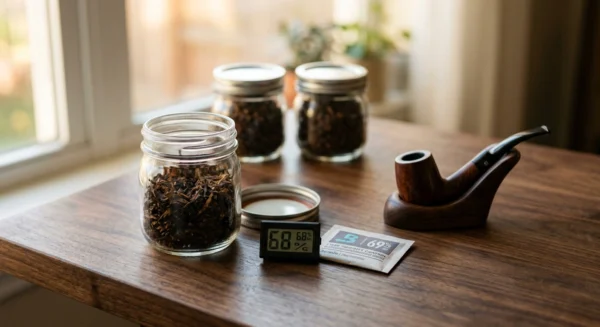
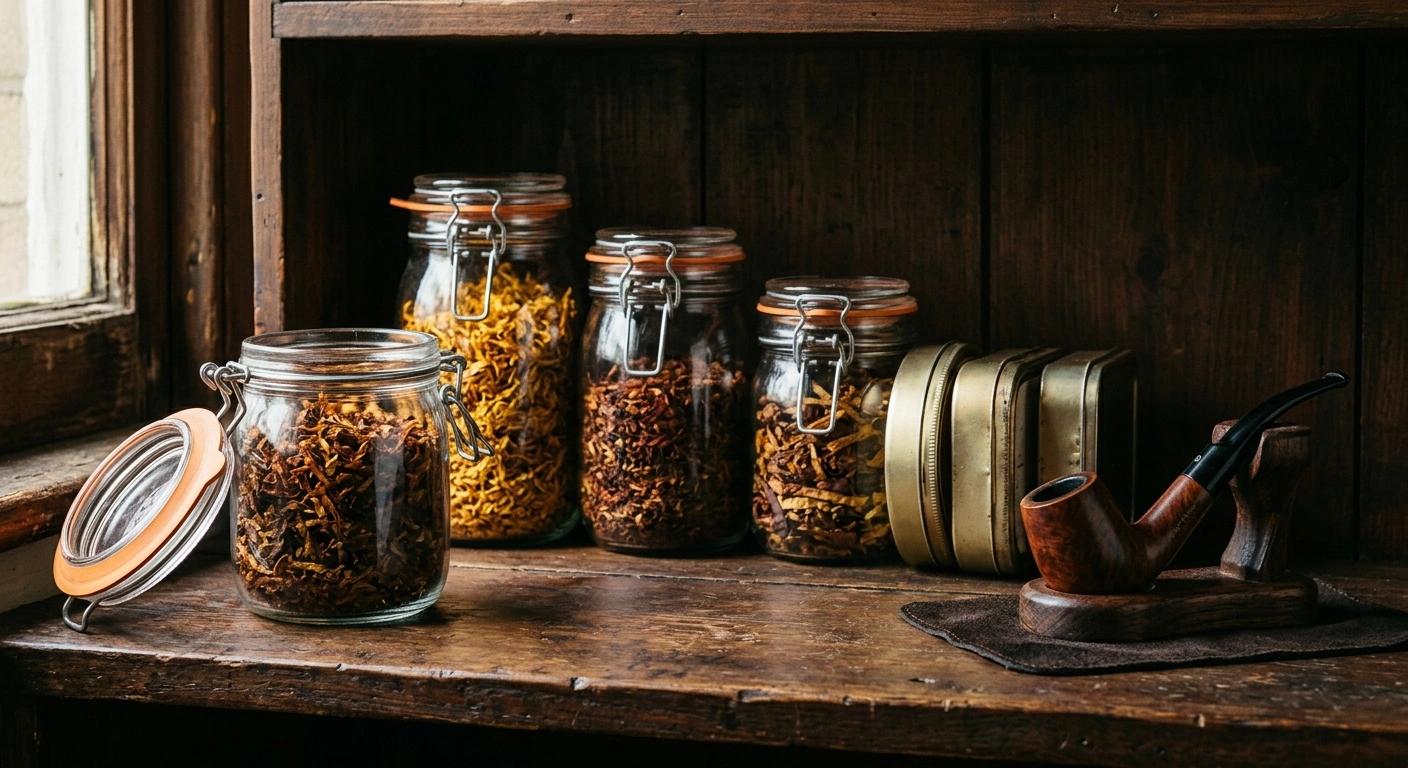
Glass canning jars suit bulk blends and opened tins. Glass resists absorbed odors and allows easy inspection. Choose food-storage jars with clean rims, undamaged lids, and sound sealing surfaces. Decorative jars with loose wooden tops rarely provide a dependable seal.
How to Inspect a Sealed Tin
Check tins occasionally for rust, stains, leaks, punctures, and seam damage. Pressure alone does not prove successful aging. Likewise, a flat tin does not always indicate failure.
Some round vacuum tins show seal loss through a flexible or poorly seated lid. Packaging designs differ, and square tins often reveal less from the outside. Do not keep pressing or flexing a lid to test it. Repeated pressure can damage the seal.
Open a tin if corrosion advances or the seam looks doubtful. Inspect the contents before moving them into a clean jar. Discard tobacco that shows mold or contamination.
How to Prepare Storage Jars
Wash jars and lids thoroughly, then rinse away every trace of detergent. Let each part dry completely. Do not use a jar that smells like sauce, pickles, scented soap, or old tobacco.
Replace cracked glass, distorted bands, damaged lids, and defective sealing surfaces. You do not need to sterilize jars in an oven. Tobacco storage also does not require the heat processing used for home canning.
Match the jar size to the amount of tobacco. Leave modest headspace, but avoid placing a small portion in a very large jar. Pack the leaf gently instead of ramming it down. Tighten the band by hand until secure.
How to Cellar Pipe Tobacco
Good cellaring requires clean packaging and patient storage. Work with dry hands on a clean surface. Keep food, fragrances, cleaning chemicals, and smoke residue away from the leaf.
Jar bulk purchases promptly instead of leaving them in thin retail bags. Do not combine unrelated remnants unless you intend to create a personal mixture. Accidental mixtures become difficult to identify or evaluate later.
Limit home mixing to commercially manufactured tobacco for personal use. Manufacturing or selling tobacco products for other people can trigger licensing, tax, and regulatory requirements. After sealing and labeling the tobacco, open it as little as possible.
- Inspect the tobacco. Check for normal leaf texture and aroma. Reject fuzzy growth, webbing, slime, unusual mustiness, or contamination.
- Select a clean container. Use a dry canning jar with an intact lid, or keep a sound factory tin sealed.
- Load the jar gently. Settle the tobacco with light taps. Do not compress it into a solid mass.
- Leave modest headspace. Keep tobacco below the rim so strands cannot interrupt the seal.
- Wipe the rim. Remove dust and tobacco fragments before placing the lid.
- Close the jar securely. Tighten the band by hand without forcing it.
- Label the container. Record the blend, storage date, cut, and relevant batch or purchase details.
- Store it in darkness. Place the container upright, away from sunlight, heaters, appliances, and water pipes.
- Inspect without opening. Look for leaks, corrosion, failed seals, condensation, or visible growth.
Temperature, Light, and Storage Location
A suitable storage space remains fairly steady through the seasons. Normal indoor temperatures generally work well. Repeated heating and cooling can move moisture and stress container seals. Direct sunlight adds heat and exposes the tobacco to unnecessary light.
An interior cupboard usually stays more stable than a garage, shed, attic, or windowsill. A dry, climate-controlled basement can also work. Damp basements encourage rust on tins and mold on boxes, labels, and shelves.
Store jars upright to keep tobacco away from the lid. This position also makes leaks easier to spot. Keep containers off bare concrete, which can encourage condensation and expose them to moisture. Refrigeration and freezing provide little benefit and may create condensation during warming.
Managing Tobacco Moisture
Stored tobacco should remain pliable rather than wet. Strands or flakes should separate without crumbling into dust. Packing moisture differs among blends, so no single texture suits every tobacco.
Very wet leaf can resist lighting and may support unwanted growth after contamination. Very dry leaf burns quickly and loses volatile aromas. It may also taste hot, thin, or harsh.
Never add fruit peel, bread, open water, or improvised food humidifiers. These materials spread moisture unevenly and can introduce bacteria, mold, odors, or sugars. Cigar humidors also make poor general storage spaces for pipe tobacco. Open blends may exchange aromas inside them.
If sound tobacco dries out, rehydrate a small amount at a time. Use distilled water or a humidity product designed for tobacco. Keep the moisture source from touching and soaking the leaf. Check it often and stop before the tobacco reaches the final target.
Moisture continues to spread after you remove the humidity source. Never rehydrate tobacco that shows possible mold. Added moisture cannot make contaminated leaf safe.
Mold, Crystals, and Other Warning Signs
Mold presents the most serious storage warning. It may look fuzzy, hairy, raised, web-like, or patchy. It often produces a musty or unpleasant odor. Color alone cannot confirm whether growth is harmless.
Tobacco may also develop dry crystalline deposits from sugars or other components. Crystals often look hard, granular, or reflective rather than soft and filament-like. Still, beginners may struggle to distinguish crystals from mold. Photographs do not always settle the question.
Never taste or smoke uncertain growth to identify it. Isolate the container so odors or spores cannot reach nearby tobacco. If you suspect mold, discard all the contents. Removing only the visible patch does not address unseen contamination.
Clean the storage area and inspect nearby containers for condensation or failed seals. Some blends naturally smell sour, smoky, fermented, or strongly aromatic. Compare a questionable container with a known fresh sample when possible. Mustiness, slime, webbing, and unexpected dampness signal trouble.
How Long Tobacco Aging Takes
Pipe tobacco follows no precise aging schedule. You may notice changes after several months, while deeper development can take years. A blend can also flatten after extended storage instead of improving forever.
The useful question concerns your preferences, not a universal peak date. Initial moisture, seal quality, and storage conditions can make identical blends develop differently. Even jars filled from the same purchase may produce different results.
Beginners should divide larger purchases among several small jars. Open one early, sample another later, and leave the rest sealed. This approach creates useful comparison points and limits repeated air exchange.
Keep a fresh reference sample when practical, but store it with equal care. Record changes in sweetness, spice, smoke, body, aroma, moisture, and burn rate. Avoid describing every difference as an improvement. Expectations can strongly influence taste and smell.
Organizing a Larger Tobacco Cellar
A cellar becomes difficult to manage when labels fade and jars move between shelves. Mark each container with the blend name and storage date. Add the original packaging date only when you know it. Never guess.
Track quantities, locations, container types, and opening notes on paper or in a spreadsheet. Place older containers where you can inspect them without moving the entire collection. Good organization should make rotation simple.
Separate heavily scented aromatics and Lakeland-style blends from neutral mixtures. This step matters most when lids, gaskets, boxes, or cupboards retain odors. Do not reuse scented components for delicate tobacco unless you can remove every trace of aroma.
Vertical and Horizontal Cellaring
Vertical cellaring stores several production periods of the same blend. It helps smokers track development and maintain reserves of regular tobaccos. Horizontal cellaring stores a wider range of blends. It offers variety but can leave many containers without a clear purpose.
Most collections benefit from both approaches. Keep larger reserves of proven favorites and smaller amounts of experimental blends. For substantial bulk purchases, use several modest jars instead of one oversized container.
Designate one jar as the working supply. Open it as needed while the other jars remain sealed. This reduces air exposure and handling across the reserve.
Opening and Smoking Cellared Tobacco
Let a cold container reach room temperature before opening it. Otherwise, moisture may condense on the tobacco. Note the lid’s seal and resistance, but remember that packaging designs vary.
Smell and inspect the contents before disturbing them. Stop if you see mold, webbing, slime, or other contamination. Isolate the container until you decide how to dispose of it.
Sound aged tobacco may initially smell concentrated after years in a sealed space. Place one bowl’s worth on a clean surface. Let it air briefly if it feels wet or smells closed. Do not dry the entire jar unless you plan to use it soon.
Test the first sample in a clean, familiar pipe. This reduces interference from old aromas or an unusual chamber shape. Record the changes and decide whether they suit your taste.
Never leave a lit pipe unattended. Use a proper ashtray and confirm that the ash is fully extinguished. Allow the pipe to cool before cleaning or storing it.
Build a Cellar for Use
A reliable pipe tobacco cellaring plan stays clean, modest, and organized. Base it on blends that already deserve a place in your rotation. Keep sound tins sealed, and transfer bulk tobacco or opened tins into airtight glass jars.
Stable indoor storage protects tobacco better than complicated humidity systems or damp basement shelves. Periodic visual checks can reveal rust, leaks, failed seals, and suspicious growth. Open containers only when necessary.
Start with several small jars and sample them at planned intervals. Keep notes about the changes you actually observe. Preservation remains the dependable benefit. Better flavor remains a possibility shaped by tobacco, storage, time, and personal taste.