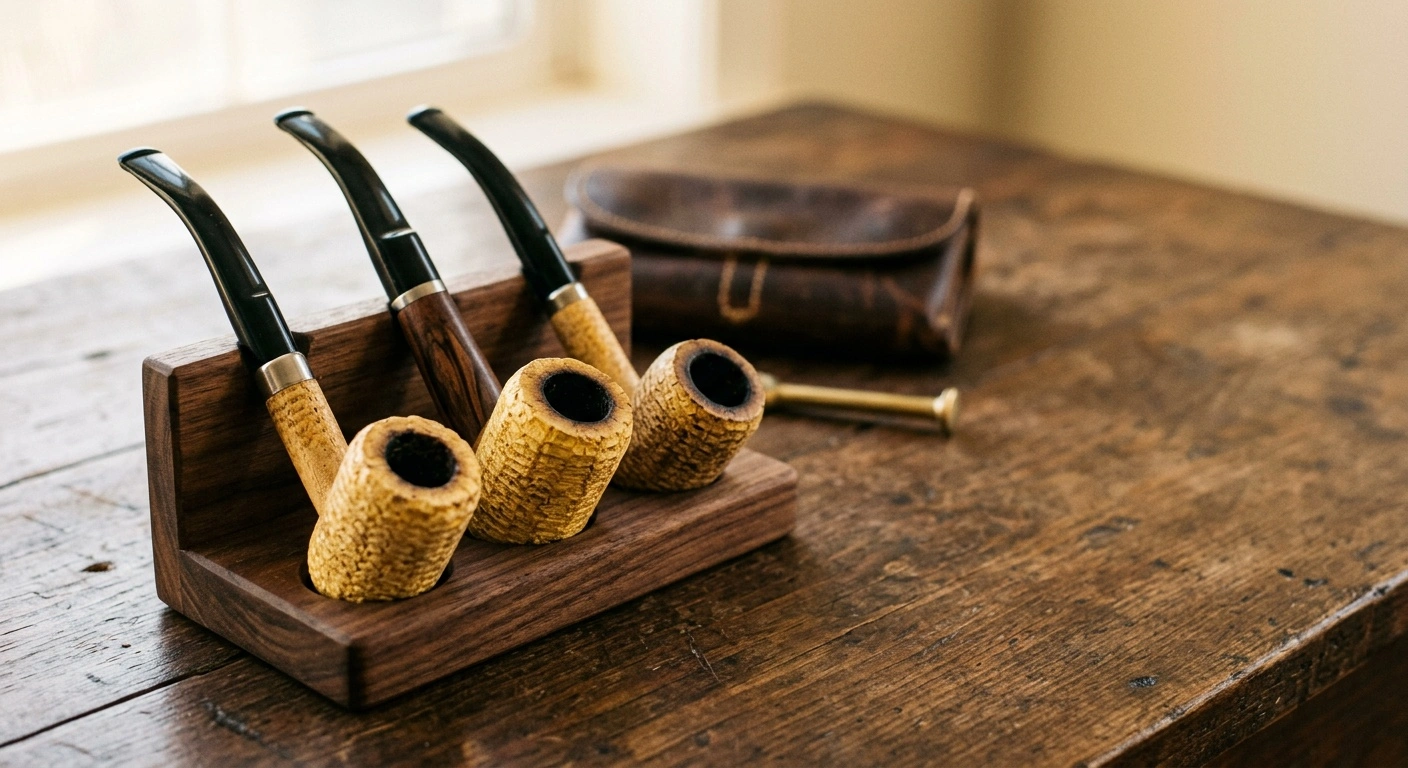
Corncob pipes are light, affordable, and forgiving. That combination suits beginners as well as experienced smokers who need a practical pipe. A good cob warms quickly without feeling heavy in the hand or jaw. Its porous bowl absorbs some moisture, which can reduce gurgling when the smoker packs it properly.
Corncob also contributes a mild character during the first few bowls. Some smokers describe the taste as faintly sweet, woody, or papery. Well-made cobs use mature bowls, secure shanks, and open airways. Cheap novelty versions may have thin walls, rough chambers, or loose stems.
A sound cob can provide years of service with reasonable care, though it will eventually wear out. These pipes suit travelers, blend samplers, and anyone building an affordable rotation. Pipe smoking still causes serious health risks, including cancers of the mouth, throat, and lungs. In the United States, federal law restricts tobacco purchases to adults age 21 and older.
The American History of Corncob Pipes
People have long made smoking pipes from available plant materials. However, the commercial cob pipe became closely associated with the American Midwest. Missouri had abundant corn, along with established woodworking trades in many small towns.
During the late nineteenth century, Henry Tibbe of Washington, Missouri, helped standardize the farm-made cob. His business later became Missouri Meerschaum, which remains closely linked with traditional American pipe making. The company name compares the cob’s light, porous qualities with genuine mineral meerschaum. Corncob itself is not meerschaum.
Manufacturers improved production with plaster-based finishes, hardwood plugs, and more consistent drilling. Workers favored cobs because they cost little, weighed less than many alternatives, and could be replaced easily. Farmers, fishermen, soldiers, writers, and public figures also helped place them in American folk imagery.
Modern cobs still carry that rustic association. Better examples, however, are purpose-built smoking instruments rather than improvised farm scraps.
How Corncob Pipes Are Made
Pipe makers need cobs with more substance than the narrow cores of many sweet corn varieties. Commercial producers select corn that develops large, dense cobs suitable for drilling. After harvest, they dry the cobs thoroughly to improve stability during shaping and repeated heating.
Makers bore out the central pith to create the tobacco chamber. They may leave the exterior natural, smooth it, or apply a plaster-based finish. The finish fills surface gaps and gives the bowl a more uniform shape.
Many models include a hardwood plug in the bottom of the bowl. This plug creates a firmer chamber floor and supports the shank where it enters the soft cob. A reed, hardwood, or similar tubular shank carries smoke to a removable plastic mouthpiece.
The airway sometimes enters slightly above the chamber floor. On plugged models, it may pass over part of the wooden base. This position can leave a small amount of unburned tobacco below the draft hole, but it does not automatically indicate faulty construction.
Open airflow matters more than a perfectly low draft hole. Look for clean drilling, secure fittings, and no loose debris. Better-finished pipes also have firm rims, tidy chamber walls, and mouthpieces that do not wobble.
How a Cob Pipe Smokes
The porous bowl absorbs some moisture created during combustion. It cannot correct tobacco that starts out wet, but it offers more tolerance than some dense or heavily finished pipes. Low weight also helps during long smokes, especially for people who hold the stem between their teeth.
Cob walls heat quickly when the smoker puffs too hard. Slow, steady draws keep the bowl comfortable and help the tobacco burn evenly. Set the pipe down if it becomes too hot to hold without discomfort.
A new cob may add a mild cornlike, woody, or papery note. That taste usually fades as the chamber darkens through normal use. Virginias, Burleys, American mixtures, and many aromatics often work well in these bowls.
No rule limits a cob to specific tobacco styles. However, strong Latakia mixtures, Lakeland-style tobaccos, and heavily flavored aromatics can leave persistent aromas. The same type of flavor carryover occurs in briar.
Aggressive smoking near the chamber floor may char the wooden plug and produce a burned-wood taste. Gentle puffing protects both the plug and the shank. Treat a cob as a working pipe, not as a disposable object.
Benefits and Drawbacks of Corncob Pipes
Practical value is the main advantage. A modest budget can support a small rotation, giving each bowl time to dry. Smokers can also dedicate separate pipes to strongly flavored blends without committing an expensive briar.
Cobs work well for sampling unfamiliar tobacco. Their low weight also suits walks, yard work, travel, and other situations where a heavy pipe feels cumbersome. If one becomes lost or damaged, replacement usually costs less than a comparable briar.
The trade-offs involve durability and refinement. Repeated hot smoking can crack the bowl, scorch the chamber, loosen the shank, or cause a burnout. Basic plastic mouthpieces may also feel thicker and less comfortable than carefully cut vulcanite or acrylic stems.
Surface plaster sometimes chips without changing how the pipe smokes. Extensive damage, however, may reveal a thin or weak bowl wall. The rustic texture may not appeal to collectors who prefer polished grain, hand-cut stems, and long-term durability.
| Characteristic | Practical benefit | Possible drawback |
|---|---|---|
| Low weight | Comfortable to hold or clench | May feel less substantial than briar |
| Porous bowl | Absorbs some smoking moisture | Needs drying time and can retain strong aromas |
| Modest cost | Makes a multi-pipe rotation affordable | Very cheap examples may have poor drilling or weak fittings |
| Replaceable mouthpiece | Allows easy cleaning or replacement on compatible models | Basic stems can feel bulky or fit loosely |
| Organic construction | Provides low weight and mild character | Offers less resistance to impact, water, and burnout |
Cob Pipes Compared With Other Materials
No pipe material suits every smoker. Briar generally offers greater durability, more shaping options, and finer stem work. A well-made briar usually costs more, but proper care can keep it in service for decades.
Genuine meerschaum uses a porous mineral rather than plant material. Smokers value it for a relatively neutral taste and the color it develops with use. It resists heat well but can break after a hard impact.
Clay delivers a direct tobacco taste and has a long history in pipe making. However, a clay bowl can become very hot and break easily. Hardwood pipes vary because each wood species and construction method behaves differently.
Metal pipes often provide rugged, consistent construction. Their bowl inserts and condensation systems create a different smoking experience from a traditional cob. Cob occupies a practical middle ground: affordable, absorbent, lightweight, and functional.
| Material | Weight | Heat behavior | Durability | Typical character |
|---|---|---|---|---|
| Corncob | Very light | Warms quickly and handles some moisture | Moderate, with eventual wear | Mildly woody or sweet when new |
| Briar | Light to moderate | Resists heat well during slow smoking | High with proper care | Usually becomes fairly neutral |
| Meerschaum | Light | Porous and generally cool smoking | Heat resistant but vulnerable to impact | Relatively neutral |
| Clay | Light | Can become very hot to the touch | Low impact resistance | Direct, neutral tobacco taste |
| Metal | Varies | Conducts heat; some designs manage condensation | Generally high | Depends on the insert and construction |
Buying Corncob Pipes Wisely
Choose a pipe according to its intended use, not appearance alone. A small bowl suits short breaks or smaller portions of flake. A deeper chamber gives ribbon-cut mixtures more room for a longer smoke.
Bent pipes may hang comfortably from the jaw. Their curved stems and airways, however, can require more effort to clean. Straight models usually pass a cleaner easily and make draft alignment easier to inspect.
Finish is partly cosmetic. A rough natural cob is not automatically worse than a smooth plastered model. Focus on a solid bowl, firm shank, open draft, and secure mouthpiece.
Missouri Meerschaum remains the best-known established manufacturer in this category. Small producers and unbranded sellers also offer cob pipes. For unfamiliar models, review the construction details instead of assuming equal quality.
Inspect the Bowl and Chamber
Look for a chamber centered well enough to leave adequate material on every side. A rustic bowl does not need perfect symmetry. Still, a paper-thin wall can create an early burnout point.
The rim should feel firm rather than crumbly, damp, or loosely layered. Small pits and surface irregularities occur naturally in the material. They rarely affect performance unless they reveal a weak section.
Inspect the bottom if the pipe has a hardwood plug. A slight step between the plug and cob may cause no problem. Avoid a pipe with a plug that moves under gentle pressure or shows large gaps.
Chamber coatings differ among manufacturers. A dark, uniform coating does not prove superior quality. Clean drilling and structural soundness matter more than interior color.
Check the Shank, Stem, and Airway
The shank should enter the bowl firmly without splitting the surrounding cob. Manufacturers may use a small amount of adhesive during normal assembly. Heavy residue can indicate rushed finishing or a previous repair.
Test the mouthpiece gently for side-to-side movement. Avoid repeated twisting, which can loosen the joint. The stem should come off for cleaning without slipping out during use.
Draw through the empty pipe when store policy permits. Air should move freely without severe restriction or an obvious whistle. A tight draw often points to poor alignment, debris, or an undersized airway.
Some models accept replaceable paper filters. Others use an adapter or support unfiltered smoking. Check the manufacturer’s specifications before ordering because filter dimensions vary.
Understand the General Quality Tiers
Entry-level cobs usually have plain finishes and basic mouthpieces. They can smoke well despite cosmetic irregularities or simple stem shapes. Inspect the drilling and fittings before judging them by price alone.
Mid-priced models often offer denser bowls, larger shapes, smoother finishes, or more substantial stems. Premium versions may add acrylic mouthpieces, decorative bands, unusual shapes, or limited finishes. These upgrades mainly improve comfort and appearance.
A simple pipe with an open airway may outperform an ornate model with restricted drilling. Buy collectible editions because you like their design, not because you expect a profit. For a first pipe, prioritize sound construction and a comfortable shape.
Breaking In a New Cob Pipe
A cob does not need the elaborate break-in routine sometimes recommended for briar. Still, smoke the first few bowls gently. This approach seasons the chamber without overheating the cob or deeply charring the wooden plug.
Do not coat the chamber with honey, spirits, or homemade treatments. These additions can produce unwanted tastes, sticky residue, and a hotter burn. Normal tobacco use will darken the chamber over time.
- Check the empty draw. Remove loose cob dust with a dry pipe cleaner. Air should pass freely before you load the bowl.
- Choose manageable tobacco. Use a familiar ribbon or rubbed-out flake at normal moisture. It should feel pliable rather than wet or brittle.
- Pack lightly. Leave enough spring in the tobacco for air to move through the bowl. The draw should remain open.
- Light the surface gently. Hold a soft flame just above the tobacco. Aim for an even glow without scorching the rim.
- Puff slowly. Put the pipe down if the bowl becomes uncomfortable to hold. Resume after it cools noticeably.
- Do not force the heel to burn. Let damp tobacco at the bottom go out instead of chasing it with repeated relights.
A few partially smoked bowls will not damage the pipe. Filling only part of the chamber is optional, not mandatory. The base will season as it sees ordinary use.
Some smokers notice a new-cob taste immediately, while others barely detect it. In either case, patience works better than trying to char the chamber quickly.
Cleaning and Caring for a Cob Pipe
A cob benefits from a simple routine: smoke slowly, clear the airway, and let the bowl dry. Unlike briar, the chamber does not need thick carbon cake for protection. Excess cake can expand and stress the softer bowl.
Keep the interior layer thin and even. Avoid aggressive adjustable reamers unless you can control them precisely. A blunt pipe knife or folded sandpaper requires equal care because both can cut into the cob.
Water can swell organic parts and loosen glued joints. Do not soak or rinse the pipe during routine cleaning. Use alcohol sparingly because it may damage finishes or adhesives.
If a badly fouled airway needs alcohol, work in a ventilated area far from flames. Never mix cleaning chemicals or use household cleaners inside the pipe. Residue can remain in the porous material.
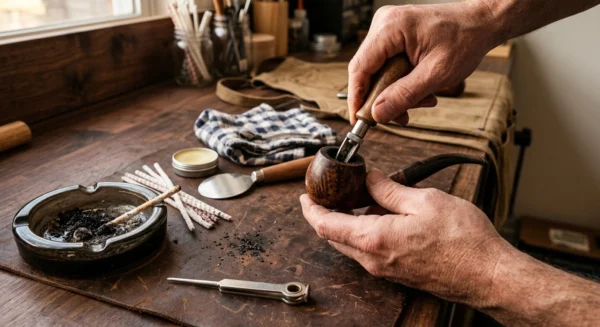
- Let the pipe cool completely. Place it in a proper ashtray until no heat remains.
- Empty the ash gently. Tap the bowl against a cork knocker or use a pipe tool. Do not strike the rim against a hard edge.
- Clean the stem and airway. Pass a pipe cleaner through until it shows little discoloration and moves freely.
- Wipe the chamber lightly. Use a folded pipe cleaner or soft paper to remove moisture and loose debris.
- Dry the pipe in open air. Set it upright or place it on a rack with airflow around the bowl.
- Replace filters when needed. Discard any filter that feels wet, looks dark, restricts airflow, or smells stale.
Do not knock the bowl against a hard ashtray edge. The rim and shank joint can break more easily than they appear. Gentle cleaning usually extends a cob’s life better than vigorous scraping.
Never leave a lit pipe unattended. Extinguish the tobacco fully before emptying the bowl. Keep matches and butane lighters away from heat, and never refill a lighter near a flame.
When to Replace a Cob Pipe
Cosmetic wear does not always end a pipe’s useful life. Chipped plaster, a dark rim, or tooth marks on a replaceable stem may have little effect on performance. Structural damage deserves closer attention.
A soft or burned spot in the bowl wall can signal an approaching burnout. Take particular care if that area becomes unusually hot during every smoke. Cracks spreading from the shank may admit air and eventually separate the bowl.
Thorough drying and careful cleaning may correct a sour smell. A persistent musty odor can indicate damp storage or contamination. Visible fuzzy growth or spreading spots with an off odor may indicate mold.
Discard a mold-contaminated cob instead of saturating the porous bowl with chemicals. A new mouthpiece can often correct a loose or damaged stem. A loose bowl plug or severely charred shank usually marks the end of practical service.
Do not continue smoking through a dangerously thin wall. A burnout can spill hot ash and create a fire hazard. Replacement costs less than repairing serious structural damage.
Choosing a Cob for Your Smoking Habits
The right cob matches your preferred smoking time and handling style. It should have an open airway, a suitable bowl size, and a comfortable stem. A straight, medium-sized model makes a practical starting point because it cleans easily and handles common tobacco cuts.
A bent model may work better for hands-free use. Before buying, confirm that a pipe cleaner can pass through the curved airway. Restricted bends trap moisture and make routine cleaning harder.
Smokers who use heavily flavored mixtures may want separate bowls for different blend families. Frequent smokers can keep several pipes in rotation, allowing each one to dry fully. Premium stems and unusual shapes add comfort or visual interest, but they do not replace sound drilling.
Buy for construction first, comfort second, and appearance third. Smoke slowly, clean the airway, and allow enough drying time between bowls. With ordinary care, a well-made cob can serve as a dependable working pipe for years.